
Can You Use a Potting Shed as a Greenhouse?
12 May 2026
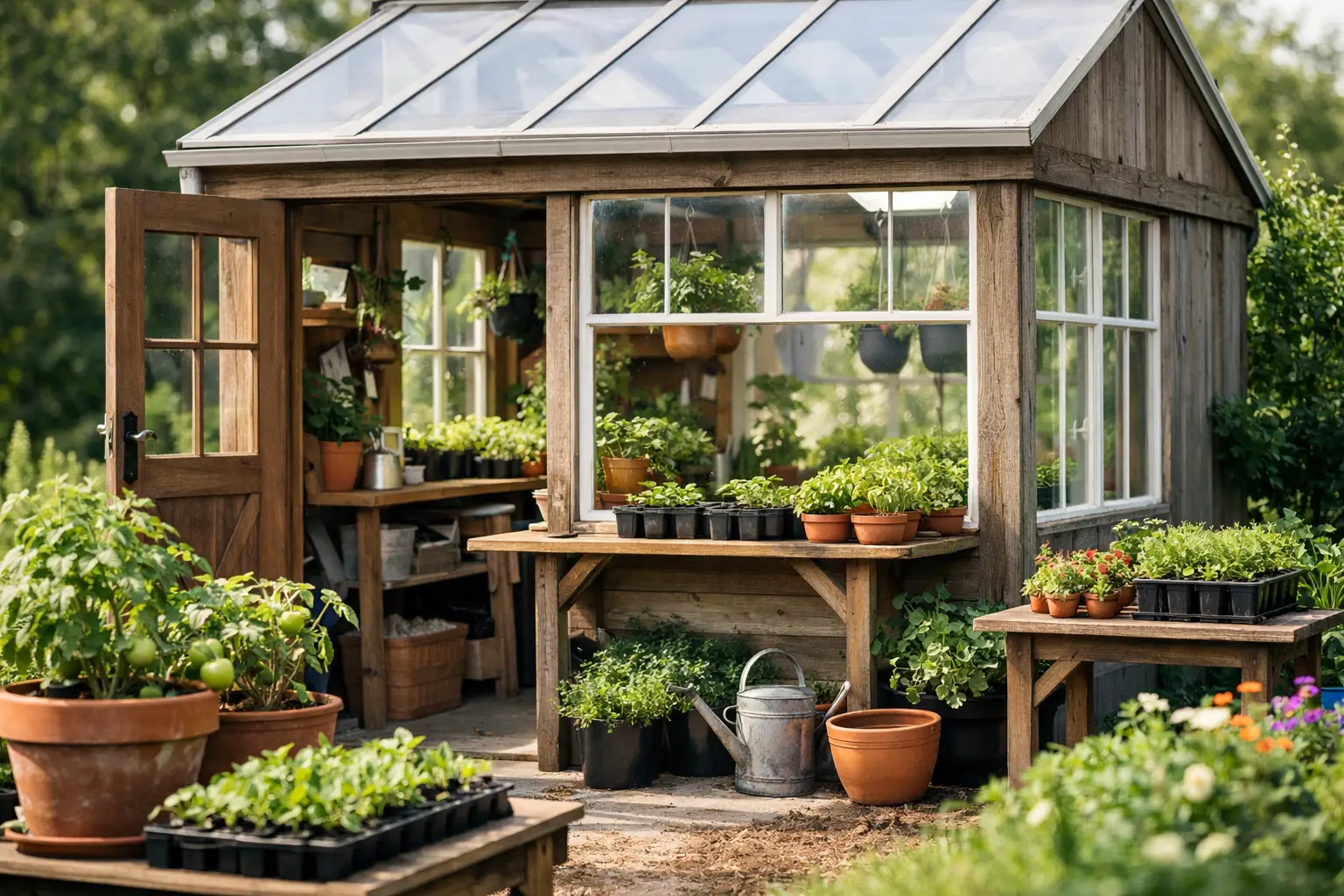
If you have ever looked at a potting shed and wondered, can you use a potting shed as a greenhouse, the short answer is yes - but not always in exactly the same way as a purpose-built greenhouse. That distinction matters. For many homeowners, a good potting shed can offer the best of both worlds: a practical workspace for sowing and storing, with enough light and warmth to support healthy plant growth.
The appeal is easy to understand. A greenhouse gives plants the bright, protected environment they need, but it is not always ideal for storage, bench work, or keeping tools tidy. A standard shed solves the storage problem, yet often lacks the light needed for propagation. A potting shed sits in the middle, which is why it is such a sensible option for gardeners who want one building to do more than one job.
Can you use a potting shed as a greenhouse in practice?
In practice, yes, many potting sheds are designed to support greenhouse-style use. They usually include large glazed sections, generous natural light, and internal bench space for seed trays, pots, and young plants. That makes them very different from a conventional garden shed.
What they do not always do is match a full greenhouse for maximum light transmission and heat build-up. A traditional greenhouse is almost entirely glazed, so it creates a more intense growing environment. A potting shed tends to have more solid wall space, which means slightly lower light levels and a gentler internal climate. Depending on what you want to grow, that can be either a compromise or an advantage.
For seedlings, herbs, salad crops, and routine propagation, a potting shed can work very well. For heat-loving crops that need long hours of direct sun and consistently high temperatures, such as tomatoes, chillies, or cucumbers, results depend more heavily on orientation, glazing area, and ventilation.
Where a potting shed works particularly well
A potting shed is often at its best when you want a flexible garden building rather than a specialist one. Many gardeners do not need an all-glass structure packed edge to edge with plants. They need somewhere to prick out seedlings, store compost, keep pots dry, and raise young plants without taking over the kitchen windowsill.
That is where a potting shed earns its place. It gives you a sheltered working area, which is especially useful in the British climate, where spring can be bright one minute and cold the next. You can pot on seedlings in comfort, keep tools and labels within reach, and still benefit from enough daylight to grow a wide range of plants.
It can also be a better fit visually. Some homeowners prefer the look of a timber garden building over a more traditional greenhouse frame, particularly if the structure sits close to the house, patio, or boundary. If the building needs to blend with the rest of the garden rather than stand out as a purely functional growing space, a well-designed potting shed can be a strong choice.
The main differences between a potting shed and a greenhouse
The key difference is balance. A greenhouse is designed first and foremost around plant growth. A potting shed is designed around growing plants and supporting the wider gardening routine.
That means the internal layout is usually more usable for day-to-day gardening tasks. You may have benching at a comfortable working height, space beneath for storage, and enclosed sections for tools, trays, feed, and accessories. In a greenhouse, you often end up sacrificing working space because the structure is dedicated to maximising growing room.
Insulation and airflow differ too. Timber potting sheds can feel more stable in temperature than a standard greenhouse, particularly in cooler months or overnight. They may not heat up as quickly in direct sun, but they can avoid some of the sharp temperature swings that make greenhouse management tricky. On the other hand, that same construction can reduce light and warmth, so the building needs to be specified carefully if plant performance is the priority.
What makes a potting shed suitable for greenhouse use?
If you want to use a potting shed as a greenhouse, design details matter more than the label on the product page.
Glazing is the first thing to look at. A model with extensive windows or a fully glazed side will perform far better for plant growth than one with only a few modest panes. Roofline and window position also affect how much usable light reaches your benches throughout the day.
Orientation is just as important. A potting shed placed in a bright, open position with good sun exposure will be far more effective than one tucked behind fencing or overshadowed by trees. Even the best building will struggle if it spends much of the day in shade.
Ventilation matters because warm, still air creates problems fast. Seedlings can damp off, foliage can scorch, and humidity can become excessive. Opening windows, vents, and doors help regulate temperature and airflow. If you plan to use the building through warmer months, this should be treated as essential rather than optional.
Benching and layout deserve some thought too. If half the interior is filled with storage, you may not have enough growing area to justify the building as a greenhouse substitute. Equally, if there is no practical storage at all, you lose one of the main benefits of choosing a potting shed in the first place.
When a dedicated greenhouse may be the better choice
There are times when a greenhouse is still the better answer. If your main goal is to grow a high volume of fruiting crops, extend the growing season as much as possible, or create a more controlled warm environment, a purpose-built greenhouse usually gives you better performance.
That is especially true for keen growers who want maximum sun exposure from all angles. A traditional greenhousemakes better use of light, and if fitted with the right ventilation and accessories, it can be tailored very precisely to specific crops.
So the question is not simply, can you use a potting shed as a greenhouse. It is whether you want a greenhouse first, or a multi-purpose growing building. If you mainly want growing power, choose the specialist option. If you want practicality, storage, and a comfortable gardening space alongside propagation, a potting shed may suit you better.
How to choose the right option for your garden
The best choice usually comes down to how you actually garden. If you sow seeds each spring, grow herbs, nurture young plants, and want somewhere pleasant to work, a potting shed can be an excellent long-term investment. If you are aiming for a more ambitious edible growing set-up, you may find a greenhouse gives you fewer limitations.
It is also worth thinking about the wider project. Ground conditions, access, base preparation, and available space all influence what will work best. A larger greenhouse is not always the most practical structure if the site is awkward or if you also need secure storage elsewhere in the garden.
This is where tailored advice can make a real difference. Choosing between a potting shed and a greenhouse is not just about product type. It is about matching the building to your growing habits, your garden layout, and the way you want to use the space over time.
A potting shed can be the smart middle ground
For many households, a potting shed offers a very sensible middle ground between a basic shed and a full greenhouse. It can support propagation, provide shelter for delicate plants, and give you a dedicated space to enjoy gardening without needing separate structures for work and storage.
The most successful set-ups are the ones that are honest about trade-offs. You may give up some peak heat and light compared with a greenhouse, but you gain flexibility, comfort, and a more versatile building. For plenty of gardeners, that is a very worthwhile exchange.
If you are weighing up the options, think beyond the building itself. Picture how you will use it in March when seed trays are everywhere, in July when ventilation matters, and in November when you still need somewhere dry to work. The right garden building should support the way you live and garden, not just look good on paper.